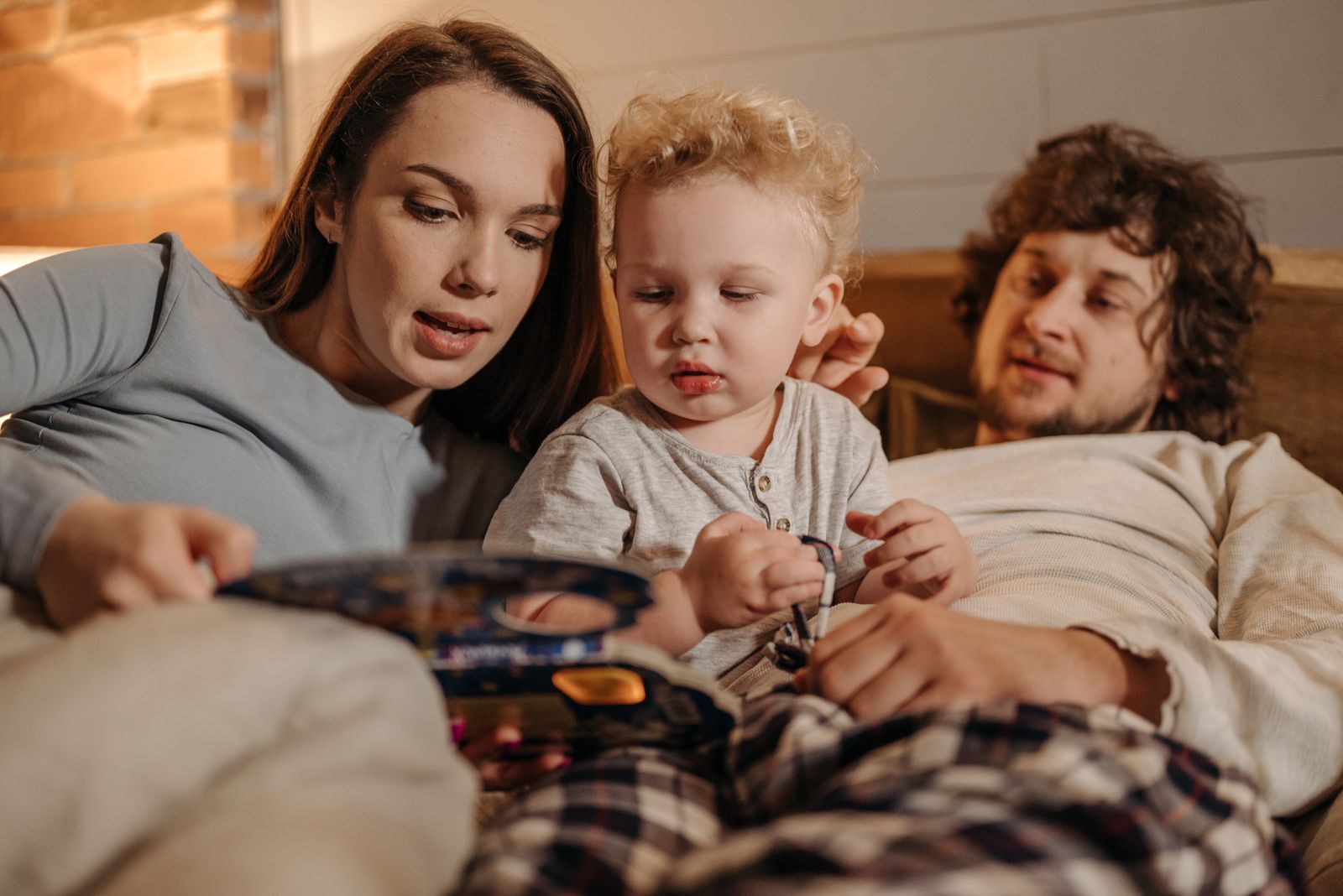
If you have ever handed your toddler a phone so you could finish making dinner, you are not alone, and you are not doing anything wrong. Screens are part of family life now. As a pediatric speech-language pathologist, the question I hear most from parents isn’t “Should we ban screens?” It’s “Is this hurting my child’s talking?”
The honest answer: it depends less on the screen itself and more on what the screen replaces. Here is what the current guidance says, why it matters for language, and what you can realistically do this week.
What the Experts Say Now
In January 2026, the American Academy of Pediatrics (AAP) released a new policy statement, “Digital Ecosystems, Children, and Adolescents.” It moved away from a single number of minutes per day and asked families to focus on quality, context, and conversation: what children watch, who watches with them, and what screen time pushes aside.
For the youngest children, the practical advice is still cautious:
- Under 18 months: Avoid screens other than video chatting with family and friends. Babies this age have a hard time transferring what they see on a screen into the real world.
- 18 to 24 months: A little high-quality content is okay, ideally watched together with an adult who talks about it.
- Ages 2 to 5: The AAP’s family guidance still generally suggests less than one hour a day of high-quality, child-centered content, watched together when possible.
The World Health Organization’s 2019 guidelines are similar, recommending no sedentary screen time for one-year-olds and no more than one hour a day for two- to four-year-olds.
Why Back-and-Forth Talk Matters So Much
Toddlers learn language through what researchers call “serve and return.” Your child points, babbles, or says a word (the serve), and you respond by naming, smiling, or adding a word (the return). Each little exchange builds the brain connections that language depends on.
A screen can’t do this well. A cartoon keeps talking whether or not your child responds. It doesn’t wait, notice where your child is looking, or simplify its words for a 20-month-old. That’s why the AAP’s policy notes that heavier non-educational and solo screen use is linked with delays in language, while high-quality content watched with a caregiver is linked with better outcomes.
Background TV deserves a special mention. Even when no one is really watching, a TV that’s always on tends to cut down how much adults talk to children. Fewer words heard means fewer chances to practice.
The takeaway isn’t guilt. It’s that the conversations happening around the screen matter more than the screen.
Making Screen Time More Interactive
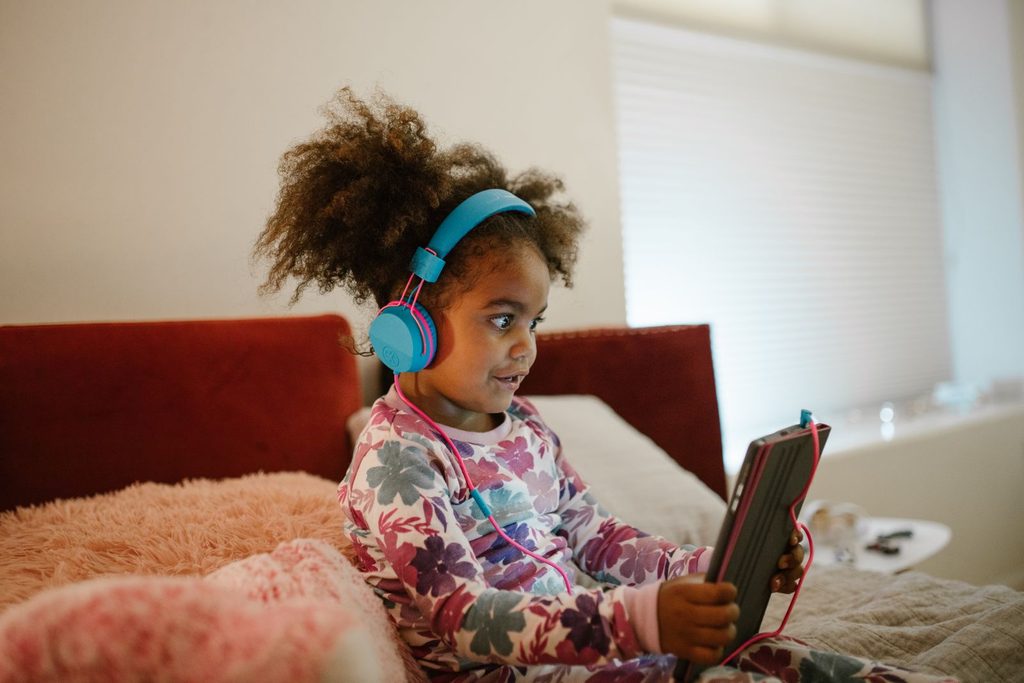
When screens do happen, a few small changes can turn passive watching into language practice.
Watch together when you can. Even five minutes of sitting beside your child changes the experience.
Narrate and label. “Look, the dog is jumping! Jump, jump!” Keep your sentences short, just a word or two longer than your child’s.
Pause and wait. Stop the show and look at your child expectantly. Count to five in your head. Many toddlers will fill the silence with a sound, a gesture, or a word.
Bring it into real life. If the show was about a bus, grab a toy bus afterward or point out buses on your next walk. Connecting screen ideas to real objects helps them stick.
Choose slower shows. Programs with a calm pace, simple language, and characters who talk directly to children (and pause for answers) are easier for toddlers to learn from than fast, flashy videos.
Turn off background TV. If no one is watching, switch it off. The quiet invites more talk.
Easy Swaps for the Busiest Parts of the Day
Most screen time happens when parents need a few minutes. These swaps keep your child busy while still building language.
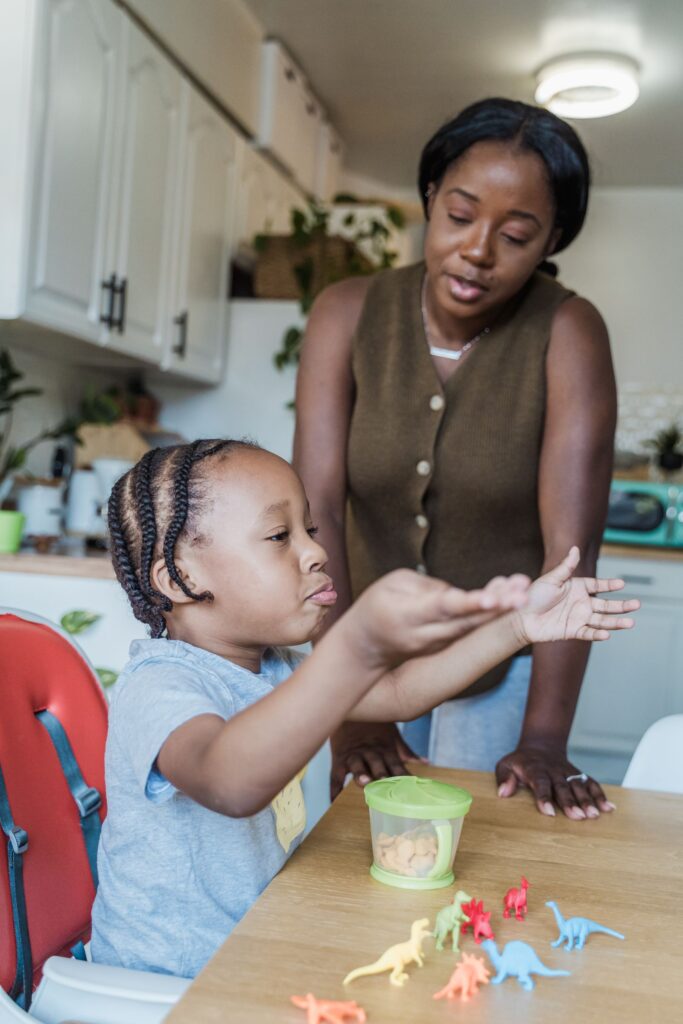
Cooking dinner: Give your child a pot and a wooden spoon, or let them wash plastic cups in a bowl of water. Talk about what you’re doing: “Stir, stir. Hot! Wait.”
Car rides: Sing songs with actions and leave out the last word for your child to fill in. “Twinkle, twinkle, little…”
Waiting rooms and restaurants: Keep a small bag with a board book, stickers, or a tiny toy. Play “I spy” with colors and simple words.
Getting ready in the morning: Name clothing and body parts as you dress. Offer choices: “Red shirt or blue shirt?” Choices invite a word or a point, both of which count as communication.
Wind-down time: Swap the bedtime tablet for a short book. Reading together is one of the best language activities there is.
None of these need to be perfect or long. A few minutes of real conversation, scattered through the day, adds up.
When to Take a Closer Look
Screens are rarely the only reason a child is late to talk, and cutting back on screens won’t fix every delay. Every child develops at their own pace, but these signs are worth mentioning to your pediatrician or a speech-language pathologist:
- By 12 months: not babbling, pointing, or waving
- By 18 months: fewer than a handful of words, or not understanding simple directions like “Give me the ball”
- By 24 months: fewer than about 50 words, or not yet combining two words (“more milk,” “daddy go”)
- At any age: losing words or skills your child used to have
Early support works. You don’t need a diagnosis or a referral to ask questions, and in the U.S., children under three can be evaluated for free through their state’s Early Intervention program.
The Bottom Line
Screens are not the enemy, and a show during a hard afternoon won’t undo your child’s development. What matters most is the talking, playing, and back-and-forth that happens every day. Keep screen time limited and shared when you can, turn off the background noise, and make the most of the small moments. You are your child’s favorite teacher, and no app can replace you.