My eldest daughter, Louisa, was born in December 2007, the same year the iPhone was announced. I remember holding her and having this strong feeling that everything was about to change. I didn’t know how, exactly. I just knew her brain was going to grow up alongside a computer that fit in your pocket, and I wanted to protect that brain while it was still forming.
So in her early years, we kept screens tiny. No cable, an old-fashioned antenna for limited TV. Almost no apps. The exception was long flights, when I’d load a few things onto a device and sit right beside her. One was a set of sign language flashcards – more for me than her. We learned baby sign language together, and by 18 months she had around 200 signs (and 500 speech words!). Later we used reading flashcards, apps for learning time and weights, and some lovely Montessori apps. Tech was helping me teach her. The key word there is me. It worked because I was in it with her.
Then came Grade 2 at a private school, where about a third of the kids already had phones. Seven-year-olds. I was shocked. I did what I always do, which is read everything I could find, and I decided we’d hold off until she was 13. Maybe 15.
By 11, almost everyone had a phone. Louisa was left out of the group texts and Snapchats. Home phones were disappearing, so her friends couldn’t even call the house. In 2021, in the middle of Covid, when she was 13, I gave in partway. She got an iPad, texting, and Snapchat. I felt like I’d caved. To her, it wasn’t nearly enough.
Next came a stylish, very expensive minimalist Swiss phone called Punkt. It only made calls and did the type of texting you can do with a numberpad. I thought it was a smart compromise. She thought it was a joke. Turned out she didn’t actually want to call anyone. What she wanted was a computer in her pocket like everyone else.
Then her school made it harder. They required an app called Titan that could track where students were and send an alert if you’d been within six feet of someone, for Covid quarantine. The basic Punkt phone couldn’t run apps. So now the school was demanding the very tech I was trying to delay. I still held out for about two years.
When Louisa switched to a boarding school in the country, the principal herself called me to insist Louisa would need a phone to check in for breakfast. I said no. For all of Grade 9, she was the only student in the whole school without a phone. She was beautiful, cool, smart, tall, and sporty. None of it mattered. She was still the outsider. In Grade 10, we relented.
Is she grateful? No. She’s resentful. On a good day, she’ll begrudgingly admit it might have made a little difference. She is studying neuroscience, after all.
While Louisa was off at boarding school, I was raising two toddlers. I was older now. More tired. Busier. And honestly, a lot less devoted to my ideals than I’d been the first time around.
My younger two were little during Covid, and even daycare and senior kindergarten moved to Zoom. Hours on iPads became normal almost overnight. So I pulled them out of school. We hung out at the park even when that was supposedly illegal. We found a secret pod school that didn’t follow the shutdown. But I was working, I couldn’t teach them myself the way I wished I could, and they fell behind.
When regular school came back, it brought more screens with it. Homework on YouTube. Practice apps. Tutoring over Zoom. It felt impossible to resist. Looking back, we were simply groomed into it. I relaxed about YouTube, pretending I didn’t know what Shorts do to a kid’s brain. Then came Minecraft. Then Roblox. Before I knew it, I had two tiny crack addicts.
So I took the iPads away. I told the school no more online homework. I battled the TV. I hid remotes in places I’ve since forgotten.
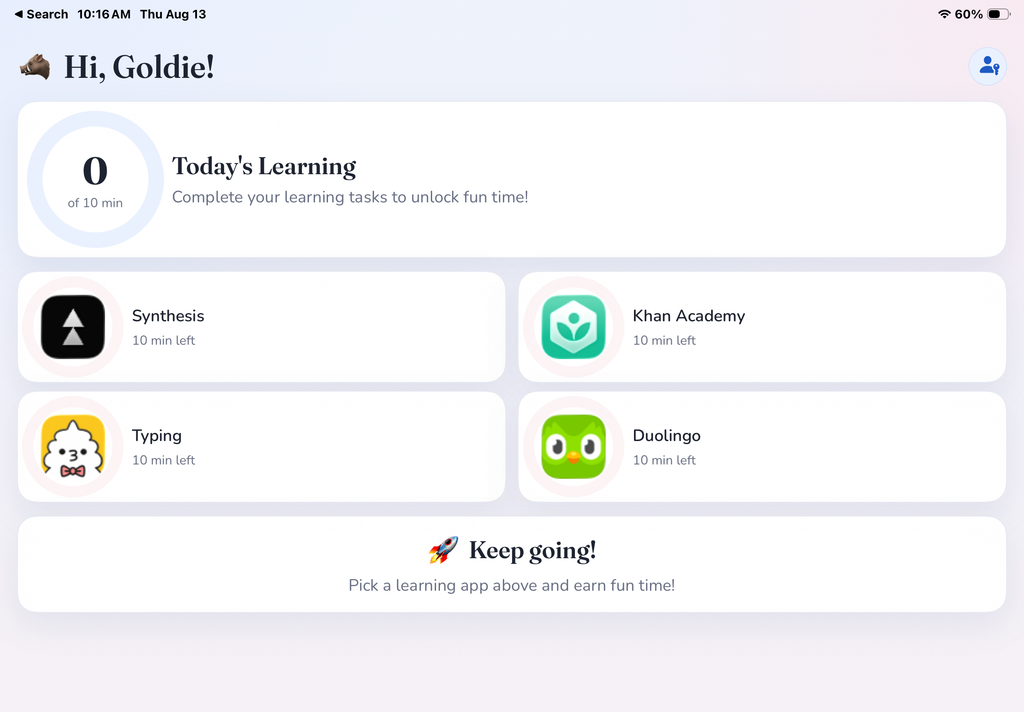
Cut to this year, and the pendulum swung back. Online homework mattered again, and there were genuinely good tools out there: Canva. Procreate. Synthesis. Khan Academy. Things I actually wanted them using.
Here’s my confession. I’m a computer junkie. I’ve been an Apple lifer, and even before then I was an 8 year old junkie on a Commodore VIC-20, copying 50-page game programs line by line. That’s exactly why I tried so hard to shield my kids. I know how good it feels to disappear into a screen.
So I bought new iPads. And then I did something I never expected to do. I vibe-coded an app.
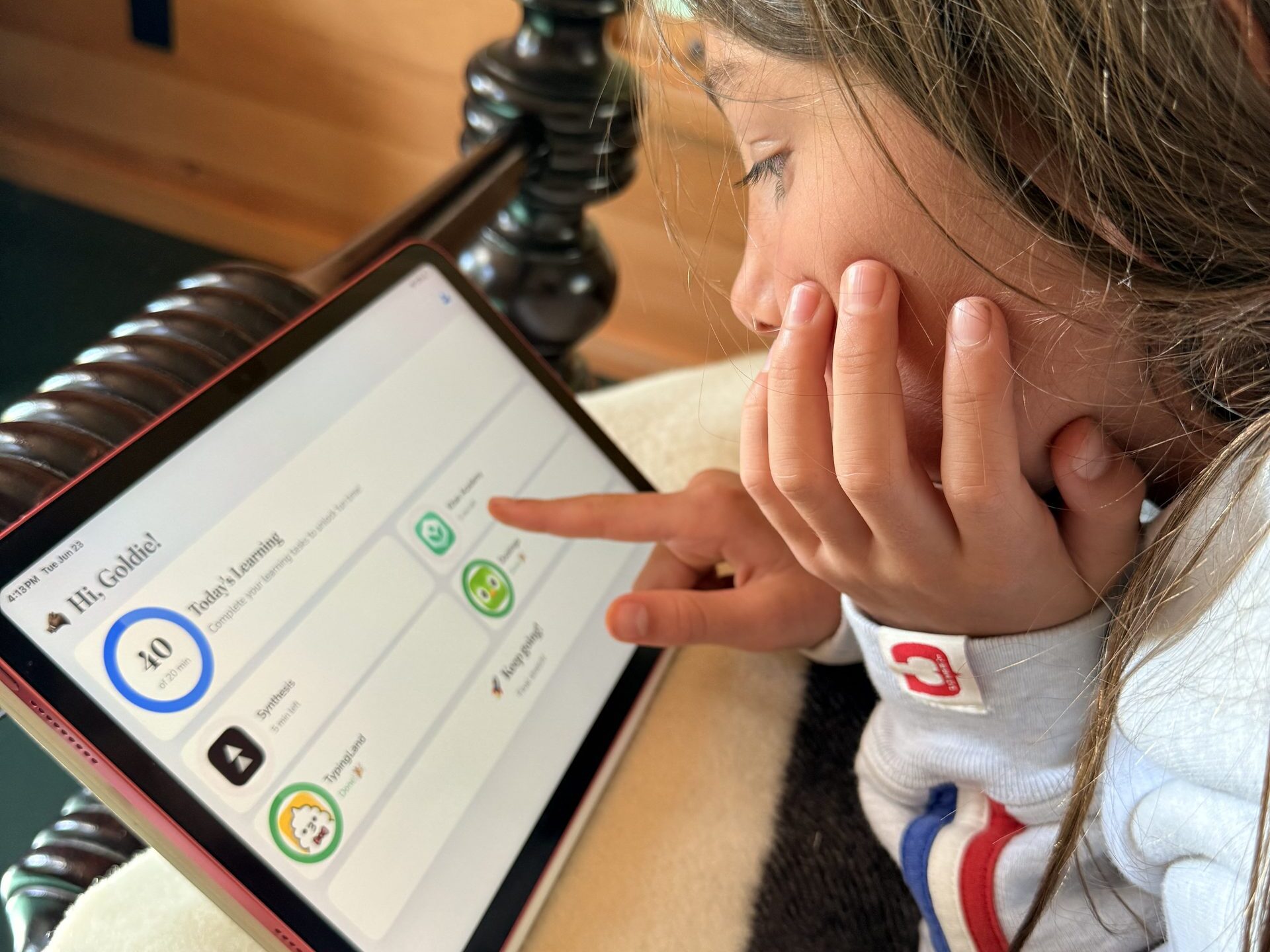
I called it TutorUnlock. The idea is simple: carrot and stick. Do about 20 minutes on a tutoring app of my choice, and it unlocks time on the games they’re hooked on. Creative apps like Canva and Procreate are always unlocked, but they don’t count toward earning game time. That way the reward points at exactly what I want them doing, not just at “less screen time” in general (you can use Apple’s own screen time controls for that).
There’s no subscription. No in-app purchases. Completely private. No data mining. Absolutely no strings attached. It’s free because I’m trying to help. I’d love for Apple to steal the idea and make it native. That would be easier for everyone.
My kids turned out to be the best testers I could have asked for. They figured out how to bypass passcodes. They deleted the app. They scrolled through the tutoring app without actually doing anything. They found a way to mess up the math so that 10 minutes of work bought 100 minutes of play. Marigold found a glitch that unlocked thousands of minutes. When I discovered it, she looked at me sheepishly – but I knew she’d keep trying to find the next glitch. Every time, I went back and fixed it. Then they found something else. Then I fixed that too.
So does it work? Sometimes. I’ve watched them do real math on Synthesis because there was a game waiting on the other side. That felt like a win.
But I’ll be honest. Kids learn to hate the stick. I knew that going in, and I tried anyway. Switching up which apps are the “stick” helps, because novelty matters to kids as much as it does to the rest of us. In a way, I’ve traded Louisa’s resentment for a different kind of resentment from her younger siblings. I’m not sure that’s progress. Maybe it is.
TutorUnlock isn’t my only tool, either. I used to use a paid blocker on Louisa’s iPad back in the day (it doesn’t even work anymore), and Apple’s Screen Time has been somewhat helpful. None of these things is magic.
If you’re a tired parent reading this, I don’t have a rule to hand you. I tried strict, and my eldest paid a social price for it. I tried relaxed, and my younger two got hooked. What I’ve landed on is this: you’re allowed to try things. You’re allowed to experiment, get it wrong, and adjust. Our kids are growing up with computers in their pockets, and none of us got a manual. We’re all writing it as we go.
If you’re curious about what I built, it’s at tutorunlock.com. And if your kids find a glitch, please tell me. Mine probably already have.